Did you know that the three heaviest land mammals on Earth are all elephants? The African Bush Elephant is first, with the African forest elephant in third. The Asian elephant is the second heaviest.
Here at Phuket Elephant Nature Reserve (PENR), our gentle giants are Thai elephants, which are classified as Indian elephants, a subspecies of the Asian elephant. And given their size, it comes as no surprise that they need to eat a huge amount of food every day.
But what do elephants eat, and how much do they need each day? Their diet is more varied than you might expect! Understanding diet and nutrition is key to caring for rescued elephants, so let’s take a closer look below.

What Do Asian Elephants Eat in the Wild?
Asian elephants are herbivores, meaning they eat only plant matter. In the wild, they consume a variety of vegetation, depending on their habitat, the season, and what is available. Grass is an important food source, but elephants also graze on leaves, shoots, twigs, bark, and roots. They eat fruit when it’s available, too. This variety helps them obtain nutrients from different plants throughout the year.
Their trunks are essential for finding and collecting food. Elephants use them to pull up grass, pick leaves, and handle individual pieces of fruit. You can learn more about this remarkable natural tool in our guide to why elephants have trunks.
An elephant’s natural diet is not fixed; it changes with the environment. This means access to different plants and enough space to forage are important parts of their daily lives.
How Much Does an Elephant Eat Each Day?
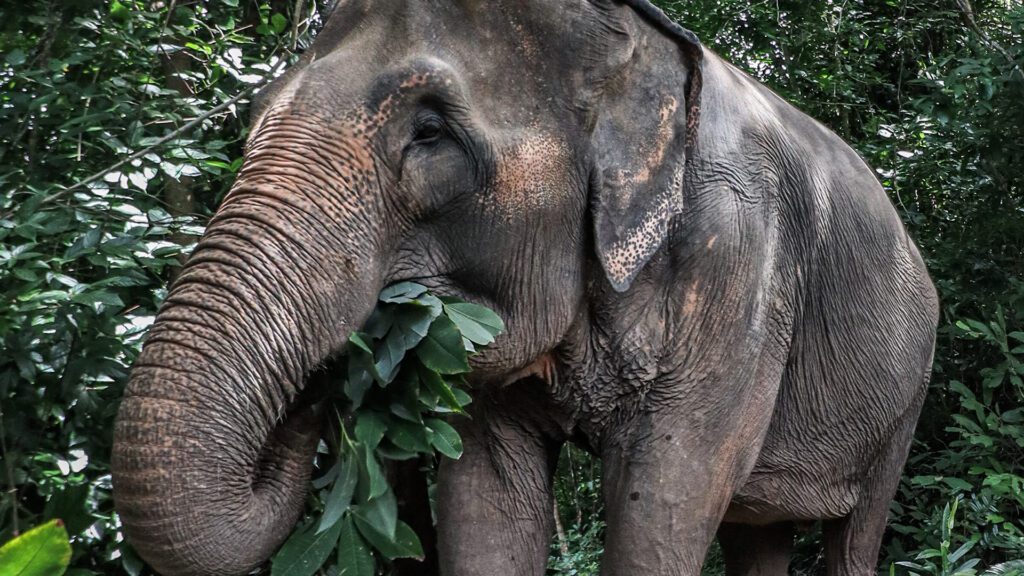
Given their size, elephants need to consume vast amounts of food. They also spend much of their day eating or searching for their next meal. But how much an elephant eats depends on factors such as its size, age, health, activity level, and the type of food available.
There is no single daily figure that applies to every elephant. At PENR, Thonglor provides a useful example. As explained in our article about Thonglor losing a tooth, her daily food intake is around 150 kg, based on approximately 8% of her body weight.
This is a substantial amount of food, and providing it requires careful planning, particularly when an elephant has specific dietary needs.
What Do the Elephants at Phuket Elephant Nature Reserve Eat?
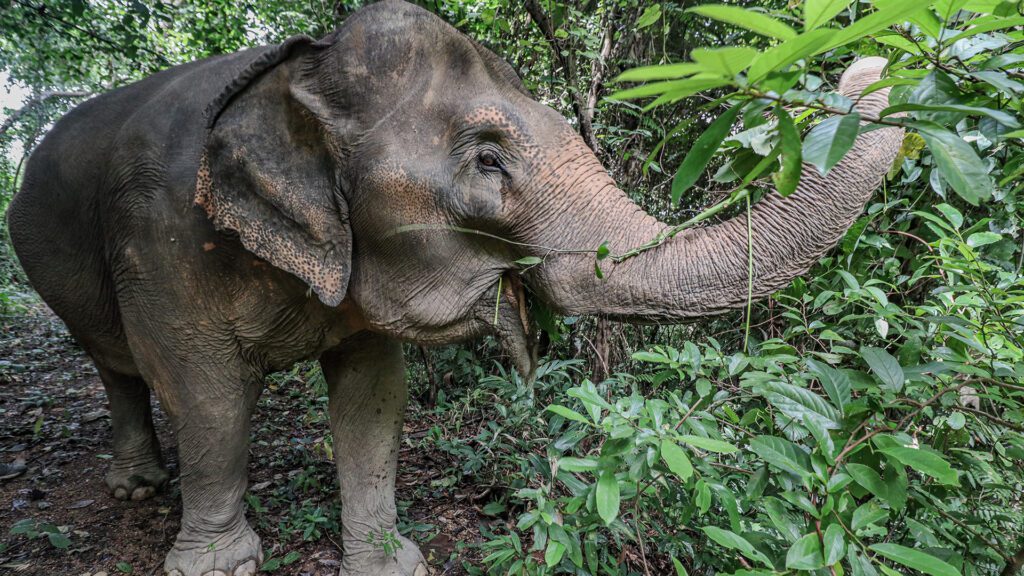
At PENR, our elephants enjoy a diet that includes a variety of vegetation and other foods chosen to support the health of our rescued residents. Their meals can include grasses, banana plants, palm leaves, and fruit, alongside nutritional supplements where needed.
Different elephants also have their own preferences. Lotus enjoys Napier grass, palm leaves, and banana plants, while Bow particularly likes pulling down and eating banana trees. These individual habits are part of what makes spending time observing elephants so interesting.
You can find out more about the personalities and preferences of PENR’s residents on the Meet Our Elephants page.
Providing a varied diet is important, but the goal is not simply to offer as much food as possible. Our team must consider each elephant’s condition and nutritional needs, adapting its care as those needs change.

Why is Nutrition So Important for Rescued Elephants?
Rescued elephants may arrive at a sanctuary with health problems or needs that require particular attention. As a result, their diet must be suitable for their condition, and sometimes even the way their food is prepared makes a difference.
Thonglor’s experience shows why. After losing a tooth, she found it harder to chew tougher foods. To help her eat more comfortably, PENR invested in a food shredder that allows suitable foods to be cut into smaller pieces.
This is a practical example of how elephant care involves more than providing enough to eat. The team must consider whether an elephant can chew its food properly and receive the nutrition it needs.
Age, dental health, and general condition can all affect how food should be prepared. A diet that works well for one elephant may not be appropriate for another. At PENR, caring for rescued elephants means paying attention to these individual differences and making adjustments when necessary.
You can learn even more about Thai elephants when you have finished here by reading our Complete Guide to Phuket’s Elephants.

How Do Elephant Feeding Habits Support Natural Behaviour?
Eating is not just about nutrition. In the wild, elephants spend considerable time searching for vegetation, choosing what to eat, and using their trunks to gather food. These activities involve movement and exploration as well as feeding.
Sanctuary care should take account of these natural behaviours. Providing suitable food and opportunities to explore their surroundings helps make daily life more varied and engaging.
This is one of the reasons why enrichment matters in elephant care. Food and feeding opportunities can form part of an environment that encourages natural activity, rather than making every meal a simple, routine event.
At PENR, visitors can learn more about elephant care while observing our animals in a hands-off environment. As we explain in our article on why observation is better than interaction in elephant tourism, watching elephants on their own terms can reveal details of their behaviour that are easy to miss when attention is focused on direct contact.

Learn More About Elephant Diets at Phuket Elephant Nature Reserve
Understanding what elephants eat is one way to appreciate the care they need. Their diet reflects their natural feeding habits, but rescued elephants may also require adjustments to support their individual health.
At Phuket Elephant Nature Reserve, visitors also learn about the daily care of rescued elephants and observe their behaviour without riding, bathing, or direct contact.
Explore our ethical elephant activities in Phuket to discover ways to visit PENR and learn more about the animals in our care.
Do you have any pre-booking questions for us? Please don’t hesitate to get in touch for the answers you need.