
Elephants are often described as social animals, but what does that mean in their everyday life? For elephants, companionship is about much more than simply being surrounded by others. Their relationships help shape how they communicate, learn, move through their environment, and respond to the world around them.
So, do elephants really have friends? While we should be careful about comparing elephant emotions directly with our own, there is clear evidence that elephants form strong social bonds and develop close relationships with other members of their groups.
For rescued elephants, like those at Phuket Elephant Nature Reserve. having opportunities for positive social interaction can also be an important part of life at an ethical sanctuary. Let’s find out more below.

Do Elephants Really Have Friends?
Elephants form complex social relationships, and they can show preferences for spending time with particular individuals. Within elephant family groups, mothers, daughters, sisters, and other relatives may spend years together. They travel, feed, and rest alongside one another, communicate through sounds and physical contact, and help care for younger elephants.
These relationships can be particularly important for young elephants. Calves learn by observing older family members, while other females may help protect and care for them.
Calling these relationships “friendships” makes the subject easy for us to understand, although researchers tend to use terms such as social bonds and relationships. What matters is that elephants are not solitary animals by nature. Their social connections are an important part of their lives.
For a closer look at how these groups work, see our guide Understanding the Social Structure of Elephant Herds in Thailand.

How Do Elephant Family Groups Work?
The Asian elephant social structure centres around female-led family groups. Female elephants tend to remain with their families, so these groups typically include mothers, daughters, sisters, and their young.
Older females play an important role within these groups because they have accumulated knowledge and experience throughout their lives. Young elephants therefore grow up surrounded by individuals who can help them learn how to navigate their environment.
As such, these groups are not simply a collection of elephants travelling with one another. The strong bonds between individuals in the herd help hold the group together. Elephants communicate, respond to one another, and make informed choices about where and how they spend their time.
Male elephants have a different social pattern. Young males usually leave their family groups as they mature and may later live alone or associate with other males.
Our guide Why Do Female Elephants Lead the Herd? looks more closely at the role of older females and why experience is so valuable within elephant family groups.

How Do Elephants Communicate with Their Friends?
Elephants are constantly communicating around a herd, although much of it can be easy for humans to miss. Elephants use vocalisations such as rumbles and trumpets, as well as body language and physical contact. Trunk touches, changes in posture, and movements towards or away from another elephant can all form part of their social interactions.
Communication helps elephants maintain contact with members of their group and respond to what is happening around them. Their trunks are especially useful social tools. Elephants use them to touch, explore, and interact with one another, alongside their many other functions.
You can learn more about this remarkable body part in our guide to Why Do Elephants Have Trunks?

Why is Companionship Important for Elephant Welfare?
If social relationships are such a normal part of elephant life, then companionship needs to be considered when thinking about elephant welfare. Good care is not simply about providing enough food, water, and veterinary treatment. Elephants also need opportunities to behave naturally, communicate, and spend time with other elephants where appropriate. That’s why enrichment is so important at our Phuket elephant sanctuary.
At the same time, social welfare doesn’t mean forcing elephants to stay together. Elephants need enough space to choose when they want company and when they would rather move away. This is particularly important in a sanctuary environment, where rescued elephants may have very different histories and personalities.
At Phuket Elephant Nature Reserve, our approach gives elephants space to move, make choices, and develop social relationships naturally. Our article Why is Space So Important for Elephant Welfare? explores why social space matters just as much as physical space.
What Does Elephant Herd Behaviour Look Like?
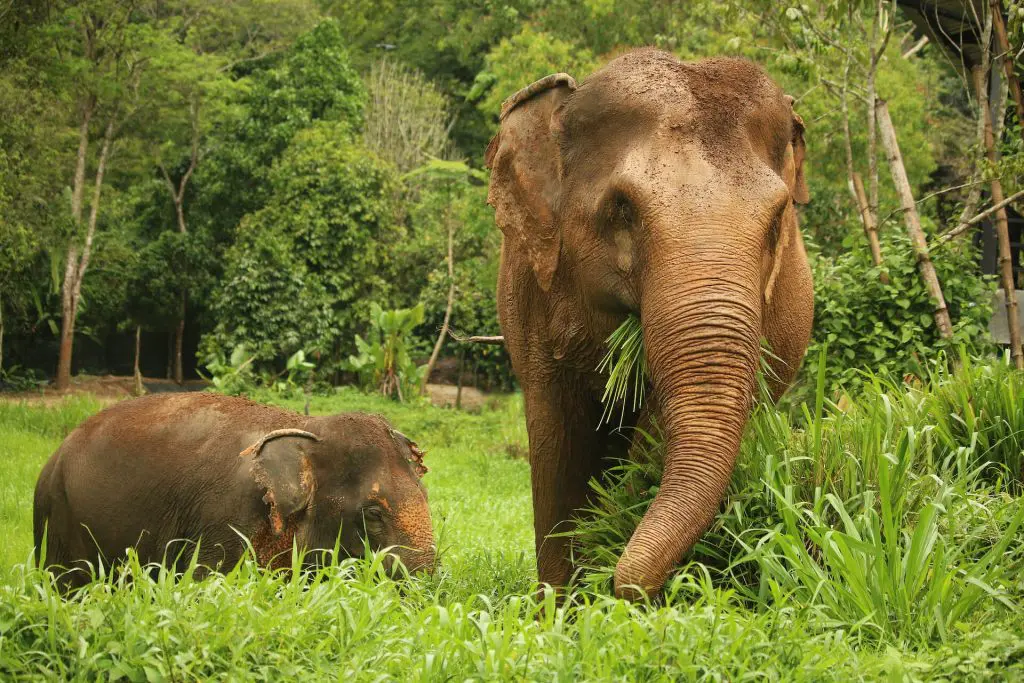
Elephant herd behaviour can be surprisingly subtle. You might see elephants walking alongside one another, feeding in the same area, or resting close together. They may communicate through vocalisations or touch, follow another elephant’s movement or simply choose to remain nearby.
Not every social interaction is obvious to a visitor. Sometimes, the most interesting thing is seeing which elephants choose to stay close and how they respond to one another.
This is why observation can teach us so much.
Different elephants have different personalities, histories, and preferences, so it’s more useful (and fascinating) to watch how individual relationships develop.
Do Elephants Miss Other Elephants?
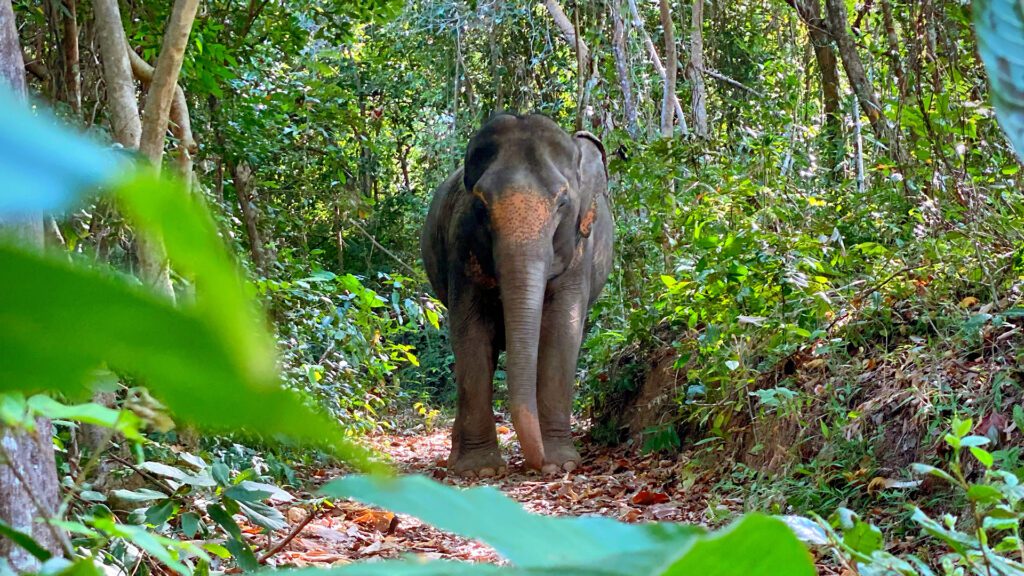
It is tempting to ask whether elephants miss their companions in the same way humans miss friends or family members. We cannot know exactly how an elephant experiences an emotion such as missing someone. However, we do know that elephants form strong social bonds and respond to changes in their social environment.
Separation, reunion, and alterations to established groups all affect elephant behaviour. This helps explain why introducing a rescued elephant to a new group needs to be handled carefully. At PENR, we don’t simply place new arrivals into the pre-existing group and expect them to settle immediately. Introductions take time, and we consider a wide range of factors, including the personalities and behavioural tendencies of all the elephants involved.
The story of Nong Tang’s arrival at PENR provides a good example. She bonded quickly with Lotus, Bow, and Thonglor, who took an interest in her as she explored her new surroundings.
Every elephant is different, though, and not every introduction unfolds in the same way.

How Does PENR Support Natural Elephant Relationships?
At Phuket Elephant Nature Reserve, social interaction is part of the care our elephants receive. Our gentle giants have opportunities to socialise with other elephants where they enjoy companionship, alongside veterinary care, enrichment, nutritious food, and space to roam.
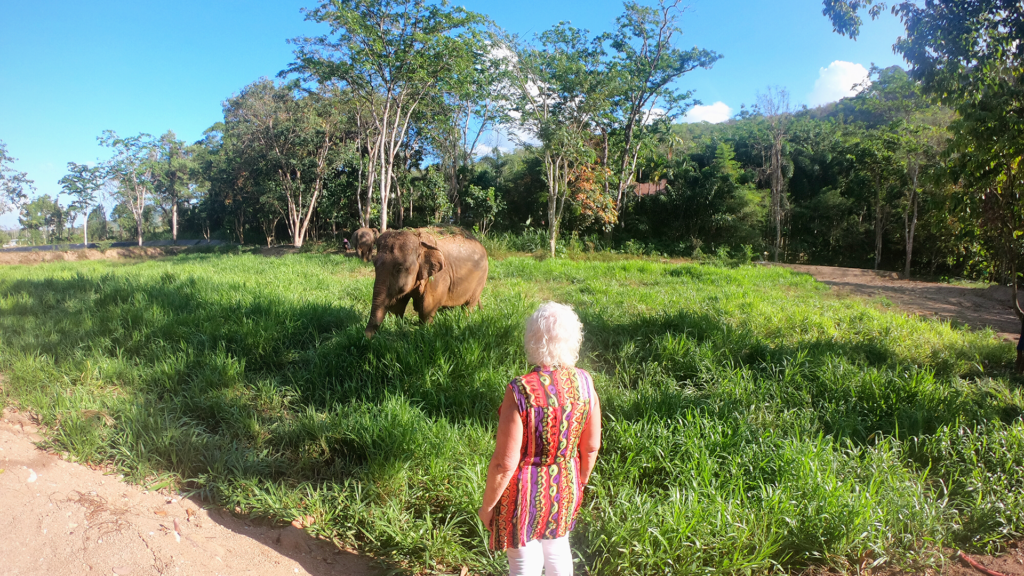
Our hands-off approach also means that visitors do not control how elephants interact. Our elephants are not required to approach guests, perform a behaviour, or take part in photo opportunities. Instead, visitors observe from a respectful distance while elephants go about their daily lives.
This matters because social behaviour is most meaningful when the elephants are free to choose it. You can learn more about this philosophy in our blog about PENR being Phuket’s pioneering hands-off elephant sanctuary.
What Can You Learn by Watching Elephant Relationships?
One of the best things about observing elephants is that the more you learn, the more you start to notice. You may see two elephants standing together, one reaching out with its trunk, or an individual responding to a call from somewhere nearby. You may also see an elephant choose to move away from the group and spend some time alone.
None of these behaviours needs to be staged for visitors. PENR’s observation-based approach allows guests to see elephants behaving naturally in their environment.
This is why observation is better than interaction in elephant tourism. Stepping back gives elephants more freedom while giving visitors the chance to watch their behaviour rather than interrupt it.

Experience Elephant Herd Behaviour in Phuket at PENR
Elephants are highly social animals, and their relationships form an important part of their lives. Family groups foster companionship, communication, and learning, while strong individual relationships help to shape everyday herd behaviour.
For rescued elephants, appropriate social contact is an important part of improving quality of life. But companionship should always come with choice. Elephants need the freedom to spend time together and the space to move away when they want to.
At Phuket Elephant Nature Reserve, we believe one of the best ways to appreciate these relationships is to observe them without interfering. When elephants are free to choose their own company, visitors on our Phuket elephant tours and activities enjoy a more genuine glimpse into their social world.
Do you have any questions for the Phuket Elephant Nature Reserve team? Please don’t hesitate to get in touch for all the answers you need.